Wadi Rum - A Desert Diary
By Dominika Baerova
The tea was sweet, the sun scorching, the days slow. In October I spent five days working at a Bedouin camp with my friend Ella, where we were given a mattress, a tent, and food such as flatbreads, hummus and Zaarb, a traditional Bedouin dinner in return for photography work and kitchen duty. Wadi Rum is a desert valley in Southern Jordan, floored in red sands and walled in by rock cliffs and mesas of sandstone and granite. I was thrilled to be going into this foreign landscape which I had first encountered as a child in the film ‘Lawrence of Arabia’. It was unlike any landscape I had ever travelled, and was eager to see it through the lens of my own camera.
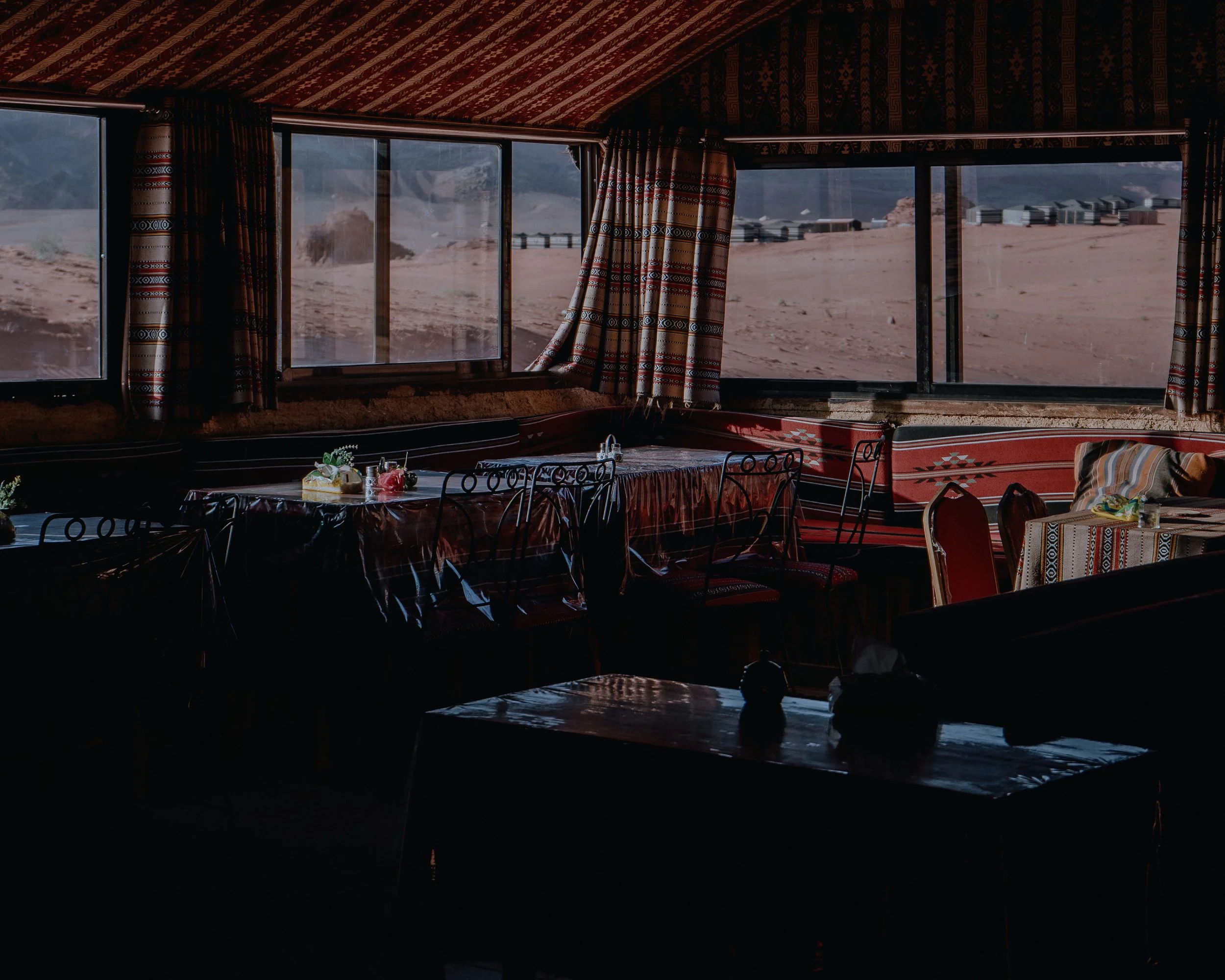
Our host Khaled came to pick us up in the Wadi Rum village in his jeep. The bumpy twenty minute ride from the village became even bumpier once, nearing the camp, Khaled spotted a group of camels that were not his in front of the camp kitchen. Annoyed, he twisted and turned the roaring vehicle, to scare them away from the food scraps left out on the sand for the cats and goats. The camels seemed used to being chased away and turned back towards the desert. Khaled’s camp was one of the last Bedouin camps, pitched just a few kilometres from the end of the Red desert and the beginning of the White desert, that runs into Saudi Arabia. He had around twenty-five black tents for guests which got sweltering and airless during the day, a cinderblock washroom where the limited water was heated only by the sun and so made showers at night rather chilly, and a large tent which served as the dining room and as a refuge from the sun.
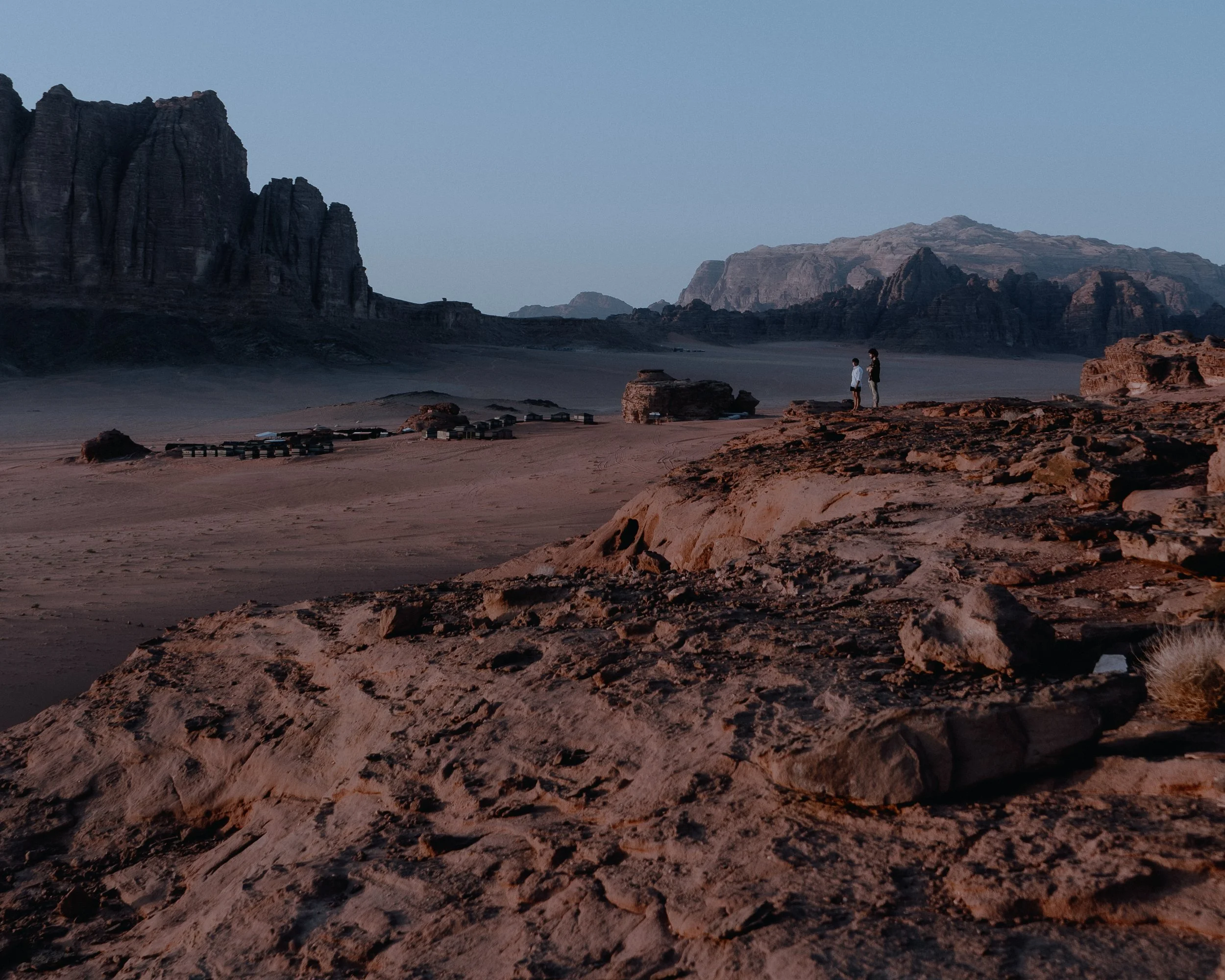
A modern Bedouin’s tent in Wadi Rum is more like a large and airy restaurant in a mountain chalet in the Alps, with a central ridge running the length of the ceiling, only with a cloth roof of stitched and embroidered red fabrics, and the windows look out not onto snow and ski runs but sand and the rocky cliffs. All the other tents were smaller versions of it, some even completed with a little en suite. The large tent’s wall fabric, together with traditional Bedouin carpets and seating cushions, patterned with red, black and white stripes, created a vibrant atmosphere. The large windows along entire front wall were kept curtained to ward off the heat. The camp lay right below a great red rock formation, where narrow steps carved into the stone led up to a little sitting area with cushions and soft mats and a fire pit. This spot provided some much needed shade during the hottest hours as well as a good view out into the desert.
Just a few kilometres across the sand dunes towered a rock range that stood like a monument, shaped by erosion, blowing sand and winds. About midway between the camp and the rock range stood an observatory, where students would come to study the night sky. The landscape’s warm hues of red, yellow, and ochre spilled out in every direction, running out over the horizon. The heat in the tents was overwhelming during daytime, and I had to keep my camera in the coolest spot I could find in the large tent, to prevent it from melting. The harsh light during the day made shooting challenging, so I saved my camera for the later hours. After breakfast duty, at midday, Ella and I would head out in the red sands and walk some three kilometres towards the White desert, water bottles packed into pouches slung across our backs, our heads protected by scarves. Though we were wary of snakes and scorpions, we were happy not to encounter any, apart from the one time that I found a nearly invisible soft little scorpion hiding under a stone by the bathroom sink when sweeping the floor.
The rock mountains and mesas of the Wadi Rum desert that stuck up around us appeared to be all that was left of the eroded canyon. Sculpted by an array of intricate lines and shaped into unique formations, more and more of them crowded in in front of us, narrowing the desert as the red sand beneath our sandals slowly blended into the white sands. We decided to try to climb one of the higher rocks for a better view of the White desert, hoping to see towards Saudi Arabia. Trying not to disturb any stingy little creatures, we tested our scrambling and climbing skills as we made our way up the steep rock, Ella in her Adidas slippers and tote bag hanging on her back, and I, with the hope that we weren’t doing anything too stupid. About a quarter of an hour we were halfway up, but found ourselves blocked by a steep wall, which, although climbable, would hardly be safely descendable. The platform of the rock we were on was wide and layered, so we turned away from the wall and found shade under an overhang where we were met with a stunning view of the Red desert. Our camp lay beyond some distant rock, an hour’s walk away. Paint-strokes of red blended with white hues of the desert sand beneath us. In the distance, the sharp contours of the rock ranges blurred in the dwindling light of the afternoon. Ella made a pen sketch of the view in her notepad and we relaxed on the cool stone for an hour or so. Though time passes by slowly in the desert, it was nearing three o’clock and we had to be back at the camp for four o’clock to help prepare tea for the guests. Once we descended, safe and sound, we found, crafted against the rock, a man-made storage space, where among a pile of rubbish stood a solitary bucket, filled with ghee, a type of clarified butter, that the Bedouins use on their journeys through the desert.
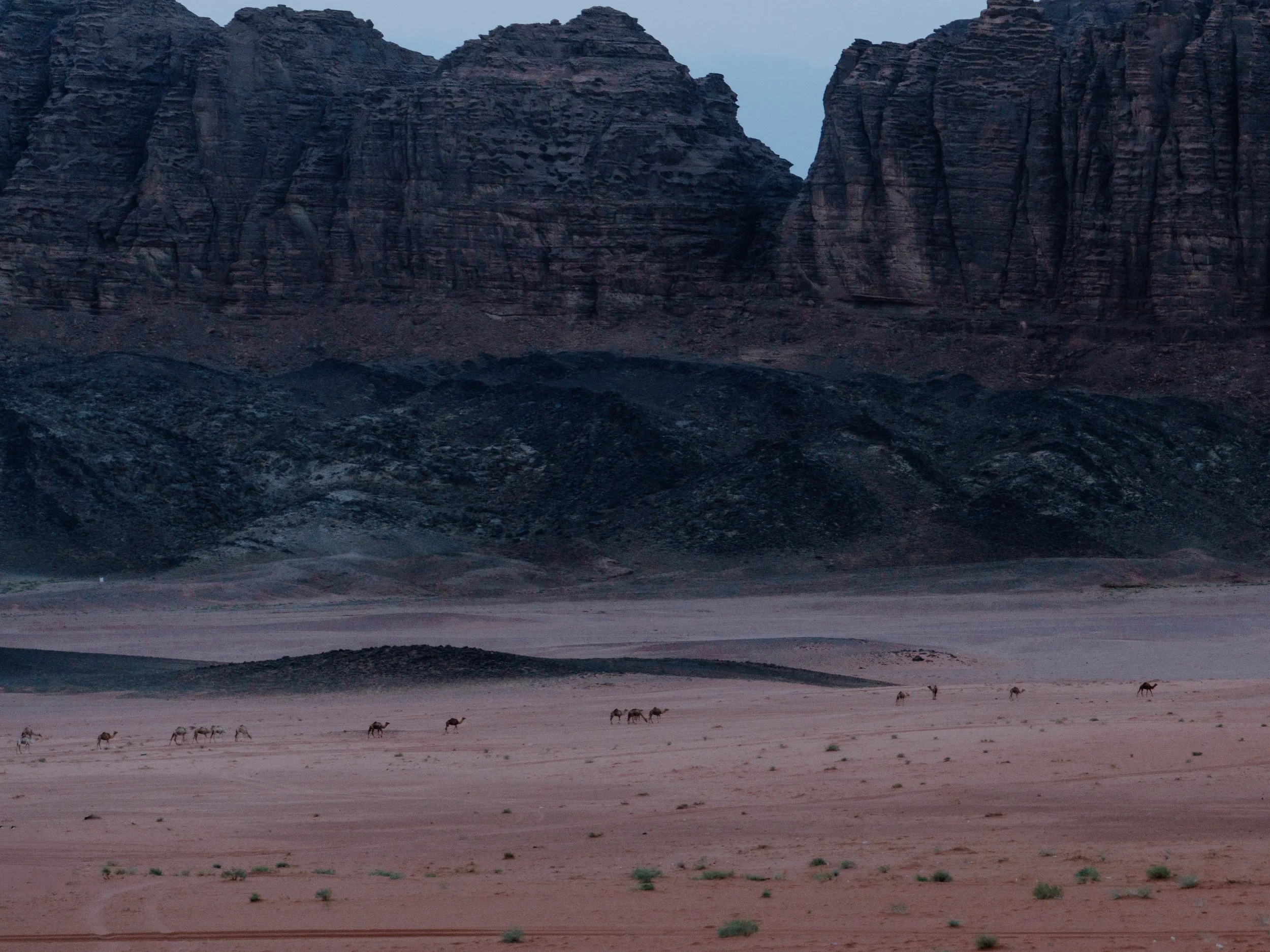
A group of camels pass through the Wadi Rum desert, Jordan (September 2023)
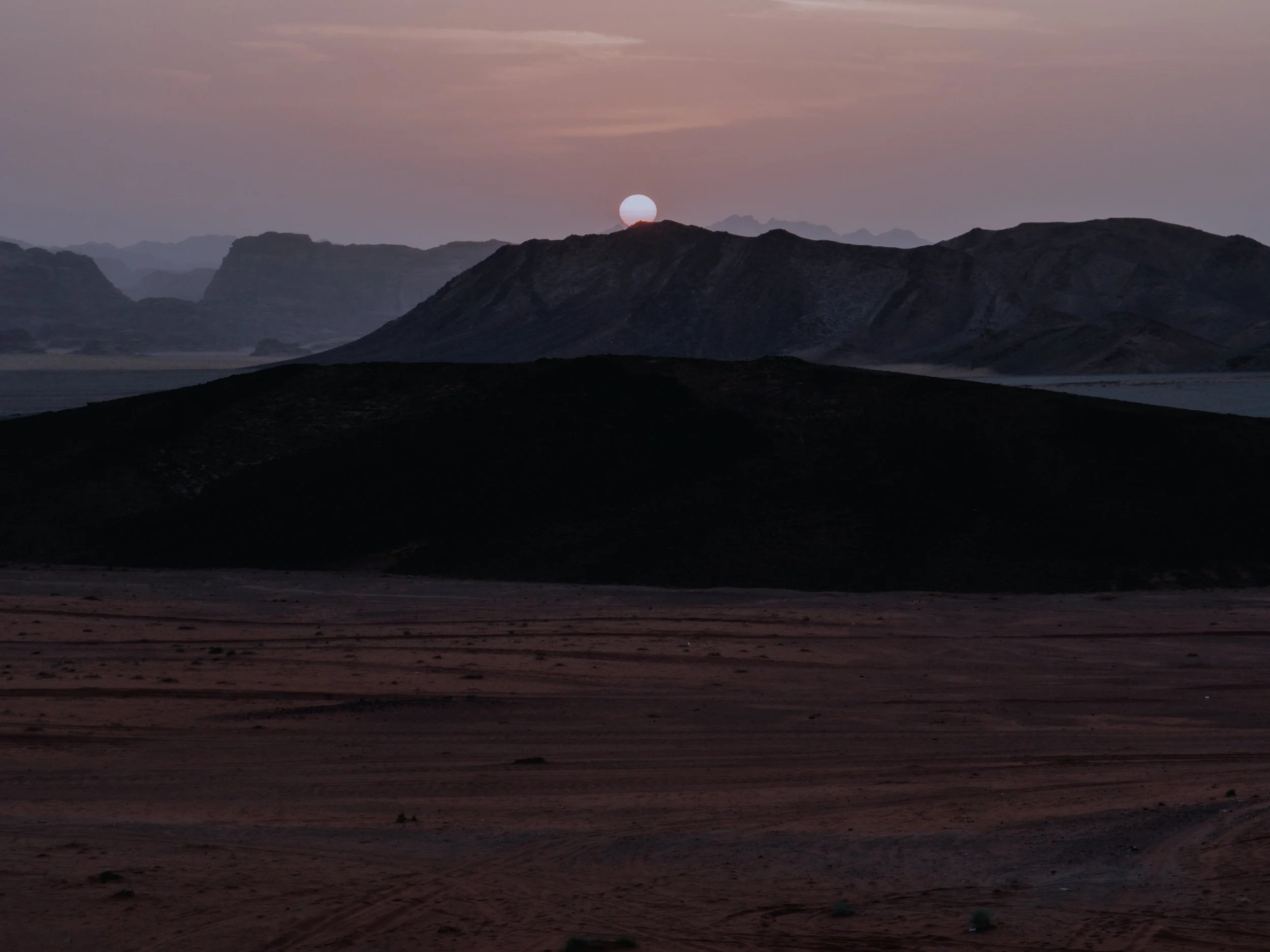
Each evening, once the sky lit up red with the setting sun, the guests, Bedouins and we volunteers climbed the rock behind the camp to watch as the desert became even warmer and more saturated. The rocks glimmered a deep sandstone red as the sun slowly set behind them. As soon as it was down, a gust of cooling wind would come wiping through the desert. This little ritual of saying goodbye to the sun was a pleasant one.
At seven thirty, we would all gather for dinner: Zaarb, a traditional Bedouin dish of roast chicken and vegetables such as carrots and parsnips, cooked on a layered metal grid. In a little performance for the guests, our cook, Supri, would lift it from under the sand, where it had been cooking from five o’clock thanks to a little fire and the sand’s heat. He would bring it into the large tent where we would all join for the meal which was accompanied by various sauces, side dishes and salads. We ate sitting on the soft red carpet that floored the back of the tent, our full plates on little round glass tables below us, and we would end our meal with honey baklava and the sweetest tea.
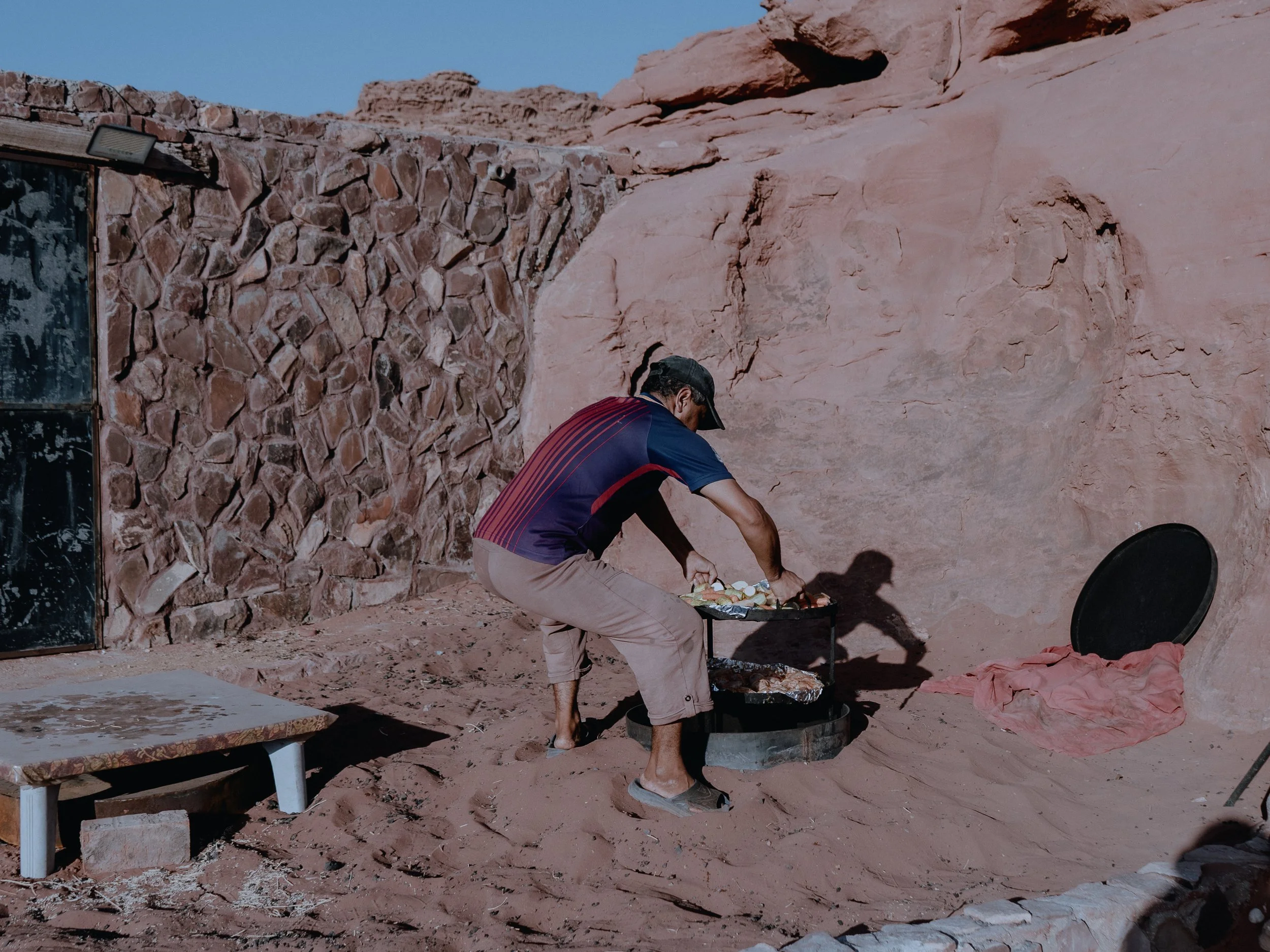
Our cook, Supri, lowering the food grid into the hot sand pit. September 2023, Jordan
One of the reasons I was excited to go to Wadi Rum was to see the Milky Way far from the lights of villages and cities. Unfortunately, for the five days we were there, a full moon washed out the stars and left them faint. Most of us slept on the sand outside the camp. The foamy mattress was comfortable and a long thick blanket protected well against the night chill, and I woke every morning to the light beginning to glow over the warming sands and rocks.
Though my time in Wadi Rum, was short, the experience of life in the desert was a truly remarkable and a memorable one. The beauty of its vastness, its warm colour and its ancient formations will stay etched in my mind and in these photographs.